
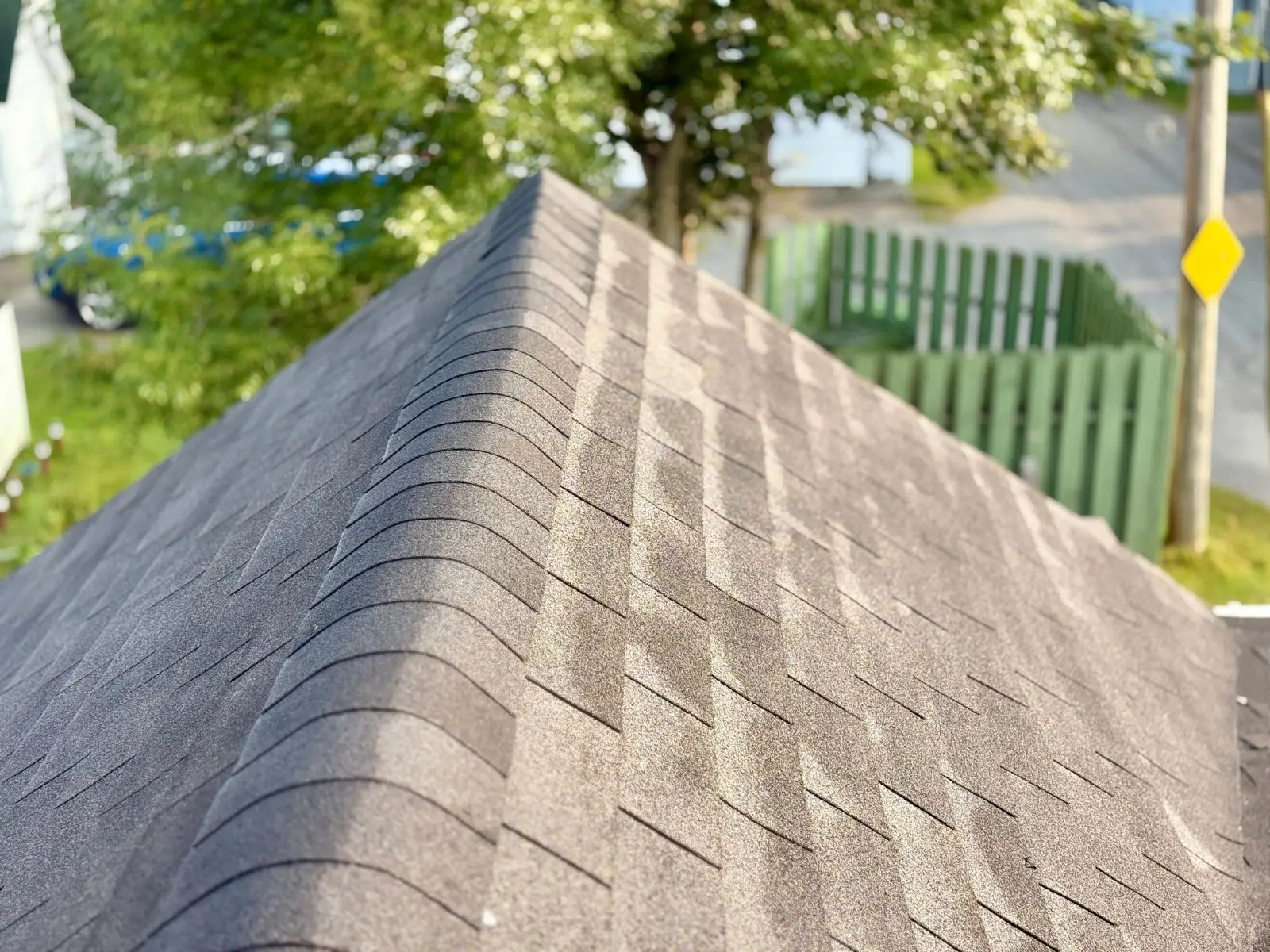
Roof Replacement and Repair in Los Angeles and Across Southern California
Green Design and Build manages roof replacement, repair and inspection as your general contractor for homes across Los Angeles County, the San Fernando Valley, Ventura County, Orange County, western Riverside County, and western San Bernardino County.
Roofing work is the repair or full replacement of a home’s roof covering, underlayment, flashing and damaged deck, done under a building permit and inspected by the building department. Green Design and Build is a licensed, bonded and insured general contractor (CSLB #1110975) based in Van Nuys, serving homeowners across Los Angeles County, Orange County, Ventura County, western Riverside County and western San Bernardino County. The roofing itself is performed and permitted under a C-39 Roofing license, by a roofing contractor scheduled and supervised by us as your general contractor. A composition-shingle replacement on a 1,500 to 2,000 sq ft single-story house typically costs $12,000 to $25,000 and takes two to five working days on the roof.
Repair, overlay or full replacement?
Repair makes sense when the covering has years left and the leak has a specific cause: a cracked pipe-jack boot, a rusted valley, a slipped tile, or a failed seam on a flat roof. What a repair cannot fix is underlayment gone brittle everywhere; patching one spot moves the leak to the next. Our roof leak repair guide covers where leaks actually start and when a leak means the whole roof.
Overlay means new shingles over the existing layer. The California Residential Code does not allow it where the roof already has two or more layers, where the covering or deck is water-soaked or deteriorated, or over wood shake, slate or tile. We rarely recommend one even when it is legal: it hides damaged decking, adds weight, traps heat, and makes the next replacement cost more.
Full replacement is a tear-off to the deck, replacement of damaged sheathing, new underlayment, new flashing at every penetration, and the new covering. Our post on whether you need a permit to replace a roof in Los Angeles describes a 1960s San Fernando Valley shingle replacement where tear-off exposed about 80 square feet of soft, stained deck around a bathroom vent from a slow leak nobody had seen from inside. Covering it would have put a new roof over a failing deck.

Which roofing material fits your house?
Composition shingle is right for most pitched roofs, including 1950s–70s Valley ranch houses: laminated architectural shingles in a CRRC-rated color over synthetic underlayment, with ice-and-water membrane in valleys and around penetrations. Concrete and clay tile suit Spanish and Mediterranean homes and HPOZ neighborhoods, but tile weighs roughly 9–12 pounds per square foot, so moving from shingle to tile needs structural review, and the underlayment fails long before the tile does. Standing-seam metal is gaining ground on hillside and fire-zone homes because it is Class A in a tested assembly, sheds embers and takes solar clamps instead of penetrations. Flat roofs on mid-century Valley homes, additions and garage conversions get torch-down modified bitumen with a white granulated cap sheet, TPO with hot-air welded seams, or spray foam with a silicone coating, with tapered insulation where water has been ponding. How long each material lasts in this climate is in our roof lifespan guide.

Tile roofs: lift and relay instead of a new roof
If your tile roof dates from the 1980s or 1990s, the felt underneath is likely at the end of its life even if the tile looks perfect, and the first signs are leaks at valleys and skylights and staining under the sheathing.
A lift and relay removes the tile in sections, tears off the old underlayment and battens, replaces damaged sheathing, installs new underlayment with new metal at every valley, eave, wall and penetration, and resets the original tile with new fasteners. Broken tiles come from matching salvage stock. You keep the look at roughly half the cost of new tile, and because the weight does not change, the job qualifies for the same express permit as any re-roof.
Permits, cool roofs and fire zones
LADBS re-roof permits. In the City of Los Angeles, which includes most of the San Fernando Valley, a re-roof is an express permit with no plan check when the new covering is Class A or B, weighs less than 6 pounds per square foot, and goes over solid sheathing; heavier tile, skylights, a pitch change or rafter work means plan check. The contractor certifies the finished work on the LADBS Re-roofing Certificate of Compliance, and new sheathing gets a nailing inspection before it is covered; our post on re-roof permits in Los Angeles covers the process. Burbank, Glendale, Pasadena, Santa Clarita, LA County and every Orange County city issue their own.
Title 24 cool roofs. Under the 2025 California Energy Code, in effect for permits filed on or after January 1, 2026, replacing more than 50 percent of a roof (or 2,000 square feet, whichever is less) triggers the cool-roof requirement. Steep-sloped roofs in Climate Zones 4 and 8 through 15 need an aged solar reflectance of at least 0.20 and thermal emittance of at least 0.75, or an SRI of at least 16; low-sloped roofs in Zones 4 and 6 through 15 need aged reflectance of at least 0.63 and emittance of at least 0.75, or an SRI of at least 75. That covers the Valley and LA basin (Zones 8 and 9), Orange County (8), inland Ventura (9) and Riverside (10); only the coast in Zone 6 escapes the steep-slope rule. Products must carry a Cool Roof Rating Council label, and the City of Los Angeles has separately required cool roofs on residential re-roofs since 2014.
Class A roofs and fire zones. Class A roof coverings are required throughout Very High Fire Hazard Severity Zones, which include much of the hillside Valley, the Santa Monica Mountains and the Orange County canyons. CAL FIRE’s March 2025 maps for Los Angeles County expanded these zones, cities may not shrink them, and many homes are entering a fire zone for the first time. Since January 1, 2026, the wildfire standards formerly in Chapter 7A of the Building Code live in the stand-alone California Wildland-Urban Interface Code (Title 24, Part 7): a Class A assembly, closed gaps under tile at eaves and ridges, metal valley flashing over cap sheet, gutter covers and ember-resistant vents, and no wood shakes or shingles.
Sources: LADBS Information Bulletin P/GI 2020-003, Express Permits (lists re-roofing among the work that can be permitted without plan check); California Energy Commission, 2025 Building Energy Efficiency Standards (the 2025 Energy Code, which applies to permit applications filed on or after January 1, 2026); California Building Standards Commission, Title 24 codes (the official index to Title 24, including the California Wildland-Urban Interface Code, Part 7).
Solar, ventilation and gutters
Solar. Panels come off before tear-off and go back on after final inspection, performed by licensed solar and electrical contractors and scheduled and supervised by us as your general contractor, so the array is down for the shortest time and the standoffs are flashed correctly. If solar is in your future, say so now and we will leave a clear roof zone, blocking and a conduit path.
Ventilation. The residential code requires net free vent area of at least 1/150 of the attic floor area, reducible to 1/300 when 40 to 50 percent of the venting is high in the attic with the balance at the eaves. On most 1950s–70s Valley houses the soffit vents are painted shut or missing, so a re-roof is the moment to fix that.
Gutters. Seamless aluminum gutters and downspouts go in with the roof, pitched to carry water away from the foundation and, on hillside lots, into the drainage system rather than onto the slope.
Recent project: roof replacement in Newport Beach


Completed in October 2025. The roof looked fine from the street, but once the old roofing came off the plank decking at the eaves was rotted through in several places. Damaged boards were cut out and replaced, then synthetic underlayment, new flashing and a light-gray architectural shingle went on across the full roof, chimney and vents included. See the full project, or the Buena Park tear-off from August 2026.
Want a real number for your project?
The site visit and the itemized written estimate are free.
Where we do this work
Roofing rules and roofs change across our five counties. In Los Angeles County the City of Los Angeles runs re-roofs as LADBS express permits, layers its own cool-roof ordinance over Title 24, and has a growing Very High Fire Hazard Severity Zone across the hillsides, while Burbank, Glendale, Pasadena and Santa Clarita have their own counters and fire-zone rules. Orange County’s housing stock is newer and mostly concrete tile, so lift-and-relay work dominates, and master-planned communities across Orange County require HOA approval of tile profile and color before the city issues a permit. Ventura County splits between coastal homes in Climate Zone 6, outside the steep-slope cool-roof rule, and inland Thousand Oaks and Simi Valley in Zone 9 with heavy fire-zone coverage. Western Riverside County, including Corona, Riverside and Murrieta, is Zone 10, where reflective colors and ventilation show up on summer bills. Learn more about our Los Angeles, San Fernando Valley, Orange County, Ventura County, Riverside County and San Bernardino County service areas, or see every area we serve.
How long does a roof replacement take?
| Job | Typical duration once material is on site |
|---|---|
| Composition shingle tear-off and replace | 2–5 working days |
| Tile lift and relay, or new tile roof | 1–2 weeks |
| Standing-seam metal | 1–2 weeks |
| Flat roof (torch-down, TPO or foam) | 2–4 working days |
An LADBS express re-roof permit is usually issued in days; heavier tile or skylights go through plan check, and solar removal adds about a week on each side.
How much does a roof replacement cost in Southern California?
On a 1,500 to 2,000 sq ft single-story Los Angeles house, a composition shingle tear-off and replacement typically costs $12,000 to $25,000, a concrete tile roof $20,000 to $45,000, clay tile or standing-seam metal $30,000 to $65,000, and a repair $500 to $3,000. The material sets most of the number. These are typical Los Angeles budgeting ranges, material and labor with tear-off, not a quote. Our roof replacement cost guide goes through each material in more detail.
| Roofing work | Per sq ft of roof | 1,500–2,000 sq ft single-story roof |
|---|---|---|
| Roof repair (flashing, a few tiles, one leak) | By the job | $500–$3,000 |
| Composition (asphalt) shingle, tear-off and replace | $5–$10 | $12,000–$25,000 |
| Concrete tile, new roof | $10–$20 | $20,000–$45,000 |
| Clay tile, new roof | $15–$30 | $30,000–$65,000 |
| Tile lift and relay (new underlayment, tile reused) | $8–$15 | $15,000–$30,000 |
| Standing-seam metal | $15–$30 | $30,000–$65,000 |
| Flat roof, torch-down modified bitumen | $5–$10 | $8,000–$20,000 |
| Flat roof, TPO single-ply | $7–$14 | $11,000–$28,000 |
Rotten plywood only shows itself after tear-off, so we replace up to 10 percent of the deck at no additional charge and price anything beyond that per sheet before we cover it. Solar removal and reinstallation, performed by licensed solar and electrical contractors and scheduled and supervised by us as your general contractor, runs roughly $1,500–$5,000; seamless aluminum gutters run about $8–$20 per linear foot.
What a homeowner said
Pasadena · February 2026New roof, solar & electrical
I worked with both Max and TOM to rebuild my roof. We added Solar a brand new electrical box and backup battery for a 1969 house. They were very responsive quick to recommend ideas. Although they were not the cheapest but they were excellent and I would gladly work with them again.
Posted on Yelp. Read all 146 reviews ↗
Frequently asked questions
Do I need a permit to replace my roof in Los Angeles?
Yes, a roof replacement in the City of Los Angeles requires an LADBS permit, and most like-for-like re-roofs qualify for an express permit with no plan check when the new covering is Class A or B, weighs less than 6 pounds per square foot, and goes over solid sheathing. Heavier tile, skylights or structural changes need plan check.
Should I overlay new shingles over my old roof or tear it off?
An overlay of new shingles over an existing roof in Southern California is only legal over a single sound layer, and rarely a good idea even then. It hides rotten decking, adds weight, traps heat, and means two layers come off at the next replacement. A tear-off costs more today but lets us repair the deck and replace all flashing.
What is a cool roof and do I need one?
A cool roof in Los Angeles is a roof covering rated by the Cool Roof Rating Council for solar reflectance and thermal emittance. Under the 2025 California Energy Code it is required when more than half of a roof is replaced in Climate Zones 4 and 8 through 15 (steep slope) or 4 and 6 through 15 (low slope), which covers nearly all of our service area except the coast.
How much does a new roof cost in the San Fernando Valley?
A new roof in the San Fernando Valley typically costs $12,000–$25,000 for a composition shingle tear-off and replacement on a 1,500–2,000-square-foot single-story house, $15,000–$30,000 for a tile lift and relay, and $30,000–$65,000 for new clay tile or standing-seam metal. These are typical Los Angeles budgeting ranges, not a quote; extra deck plywood, solar removal and gutters are separate line items.
My tile roof is leaking. Do I need a whole new roof?
A leaking tile roof in Southern California usually needs new underlayment, not new tile. The felt beneath a 1980s or 1990s tile roof is typically brittle and failing at valleys and penetrations while the tile has decades left. A lift and relay replaces the underlayment, flashing and damaged sheathing and resets the original tile at roughly half the cost of a new tile roof.
What roof do I need in a Very High Fire Hazard Severity Zone?
A roof in a Very High Fire Hazard Severity Zone in California must be a Class A assembly, and wood shakes and shingles are prohibited. Under the California Wildland-Urban Interface Code in effect since January 1, 2026, it also needs closed gaps under tile, metal valley flashing over cap sheet, gutter covers and ember-resistant vents. CAL FIRE’s 2025 maps expanded the zones, so check your parcel first.
Recent projects
Orange County roof replacements we have managed as general contractor.
- Roof Replacement in Newport Beach — a full tear-off and replacement.
- Roof Replacement in Buena Park — a full tear-off and replacement.
More completed work, with before, during and after photographs, is in the project gallery.
Design ideas
If you are still working out what you want, we have written up the design decisions in this trade — what each choice does to the space, what it costs, and which ones you cannot undo later: Roof design ideas. See design ideas for the whole house as well.