
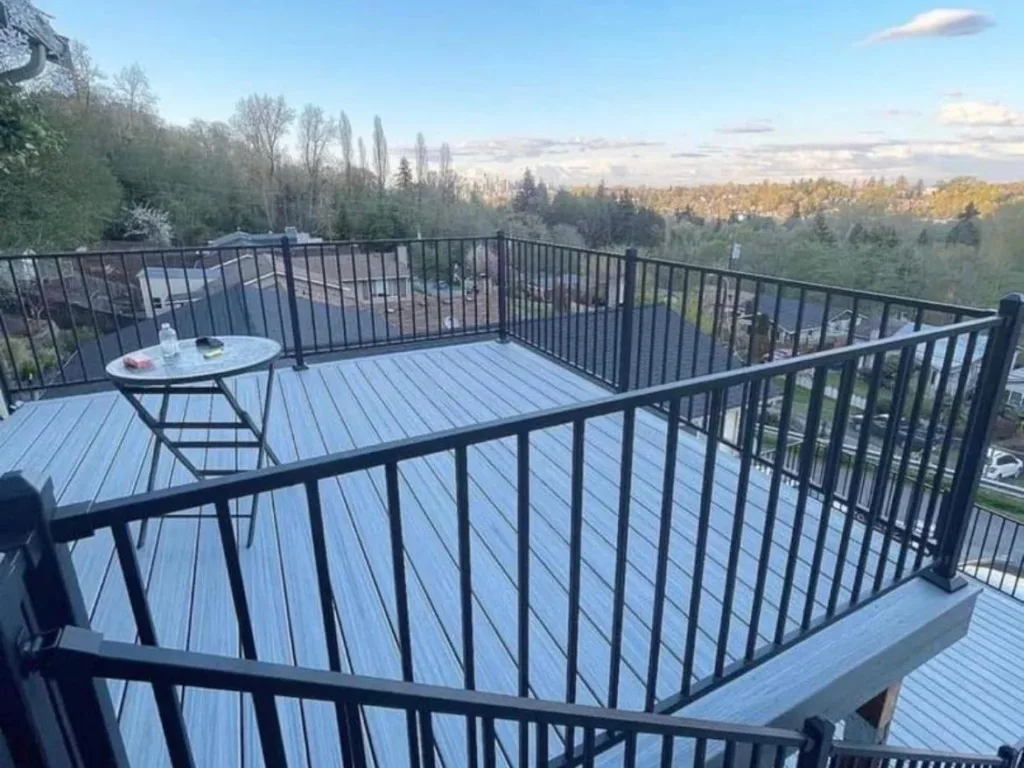
Decks in Los Angeles and Across Southern California
Most of our service area is slab-on-grade, so a deck is usually the answer for a sloped or hillside lot, or for a raised-foundation house with a door sitting three feet above the yard. On a flat lot at grade, pavers are normally the better choice, and we will tell you so rather than sell you a deck you do not need. We build composite and redwood decks on engineered framing, attached and freestanding, with the railings and stairs to code.
Green Design and Build is a licensed general contractor (CSLB #1110975) that designs, permits and builds decks for homeowners across Los Angeles County and the San Fernando Valley, Orange County, Ventura County, western Riverside County and western San Bernardino County. A raised deck means engineered footings, a guardrail to code and a ledger the inspector will look at hardest, and design-build means the engineering, the permits and the framing are all ours. For a roof over the deck, see patio covers; for the whole yard, start at outdoor living.
Decks
Composite or redwood. Capped composite costs more per foot and does not need staining, splinter or check in the sun; it gets hot in dark colors and is heavier, so joists go closer together. Redwood is cooler underfoot and cheaper; it needs a finish every couple of years and will gray and crack if you skip it. The frame is pressure-treated lumber either way, with joist tops taped under composite.
Ledger or freestanding. An attached deck hangs on a ledger bolted through the rim joist, flashed above and behind, with lateral-load connectors tying it to the house framing. This is the detail the inspector spends the most time on, because a rotted ledger is how decks collapse, and on a stucco house the stucco is cut back and reflashed. A freestanding deck sits on its own posts a few inches off the wall; it costs a little more in footings, avoids opening the wall, and on a house with questionable framing it is what we recommend.
Footings. Frost is not the issue here; expansive clay and sloped grade are. Each post gets a poured footing sized to the soil and the load, with a metal post base holding the wood above the concrete. On hillside lots the engineer calls for deeper piers and sometimes a grade beam.
Height and permits. In the City of Los Angeles, the building code (LAMC 91.106.2) exempts platforms not more than 30 inches above grade from a building permit; anything higher needs a permit, engineered footings and a 42-inch guardrail. The California Residential Code that most other cities in our service area adopt is narrower: a deck is exempt only if it is under 200 square feet, not more than 30 inches above grade, not attached to the house and not serving an exit door. So a low attached deck in Orange or Ventura County can still need a permit, and a hillside lot is reviewed regardless. We confirm for the address.
What a deck costs in Southern California
Decks are priced per square foot, with footings and framing included.
| Deck type | Typical Southern California installed range, per sq ft |
|---|---|
| Redwood decking on pressure-treated frame, at grade | $35–$60 |
| Composite decking on pressure-treated frame, at grade | $45–$75 |
| Raised deck over 30 in with 42 in guard and stair, redwood | $50–$80 |
| Raised deck over 30 in with guard and stair, composite | $60–$95 |
These are typical Los Angeles budgeting estimates, not a price list or a quote. Your project can come in lower or higher depending on the house, the scope and the finishes; the only real number is a written proposal after a site visit.
Where we build
In Los Angeles County and the San Fernando Valley, most houses are slab-on-grade, so the decks we build are on hillside lots or on the older raised-foundation blocks, and hillside posts get engineered piers rather than pad footings. In Orange County, a deck visible from the street or from a neighbour goes through HOA architectural review before the city permit — railing style and board colour are what usually get questioned — and we prepare that package. In Ventura County, from Thousand Oaks and Simi Valley to Camarillo, open lots and wind mean more lateral bracing on a freestanding deck. In western Riverside County — Corona, Riverside and Murrieta — and in Ontario, Rancho Cucamonga and Upland, surface temperature decides the decking: dark composite on a west-facing deck is too hot for bare feet. Full list on our service areas page.
Frequently asked questions
How high can a deck be before it needs a permit?
In the City of Los Angeles, a platform not more than 30 inches above grade is exempt from a building permit under LAMC 91.106.2. Above that, you need a permit, engineered footings and a 42-inch guard. Most other cities use the state residential code, which also requires the deck to be detached, under 200 square feet and not serving an exit door. Hillside lots are reviewed regardless.
Is composite decking worth the extra cost over redwood?
If nobody in the house will stain a deck every two years, yes. Composite costs roughly a third more installed and then costs nothing for a decade or more. Redwood is cooler underfoot, cheaper and better looking the day it is finished, but a neglected redwood deck in Valley sun grays and checks within a few summers. On a west-facing deck, pick a light composite color; dark boards get too hot for bare feet.
Start with a site visit
The right deck depends on the slope, the foundation and whether it hangs on the house or stands on its own posts. The site visit is free, takes about two hours, and you will have a written proposal within 48 hours with the permits, the framing and the decking listed separately.